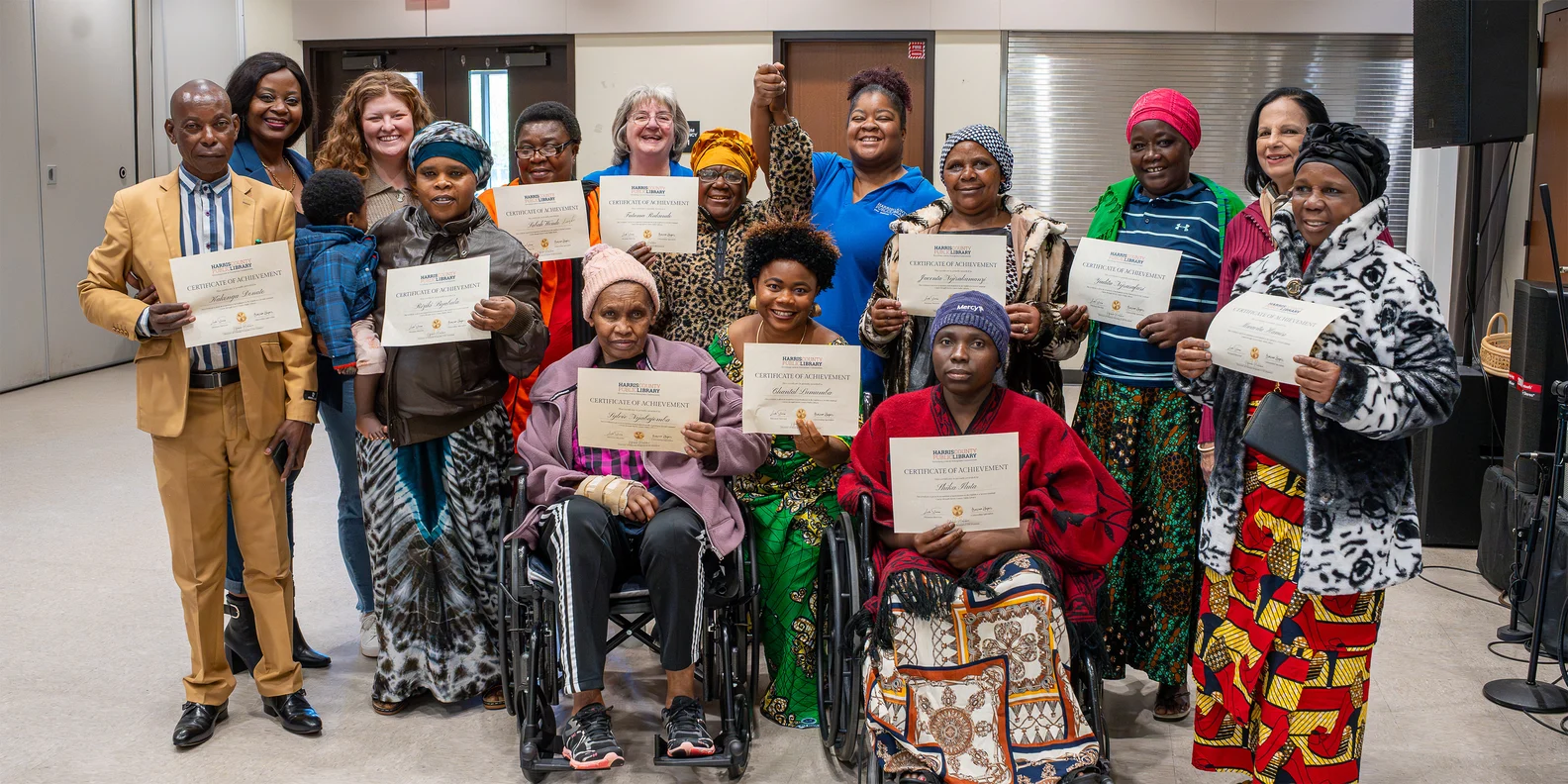
Building trust, one conversation at a time
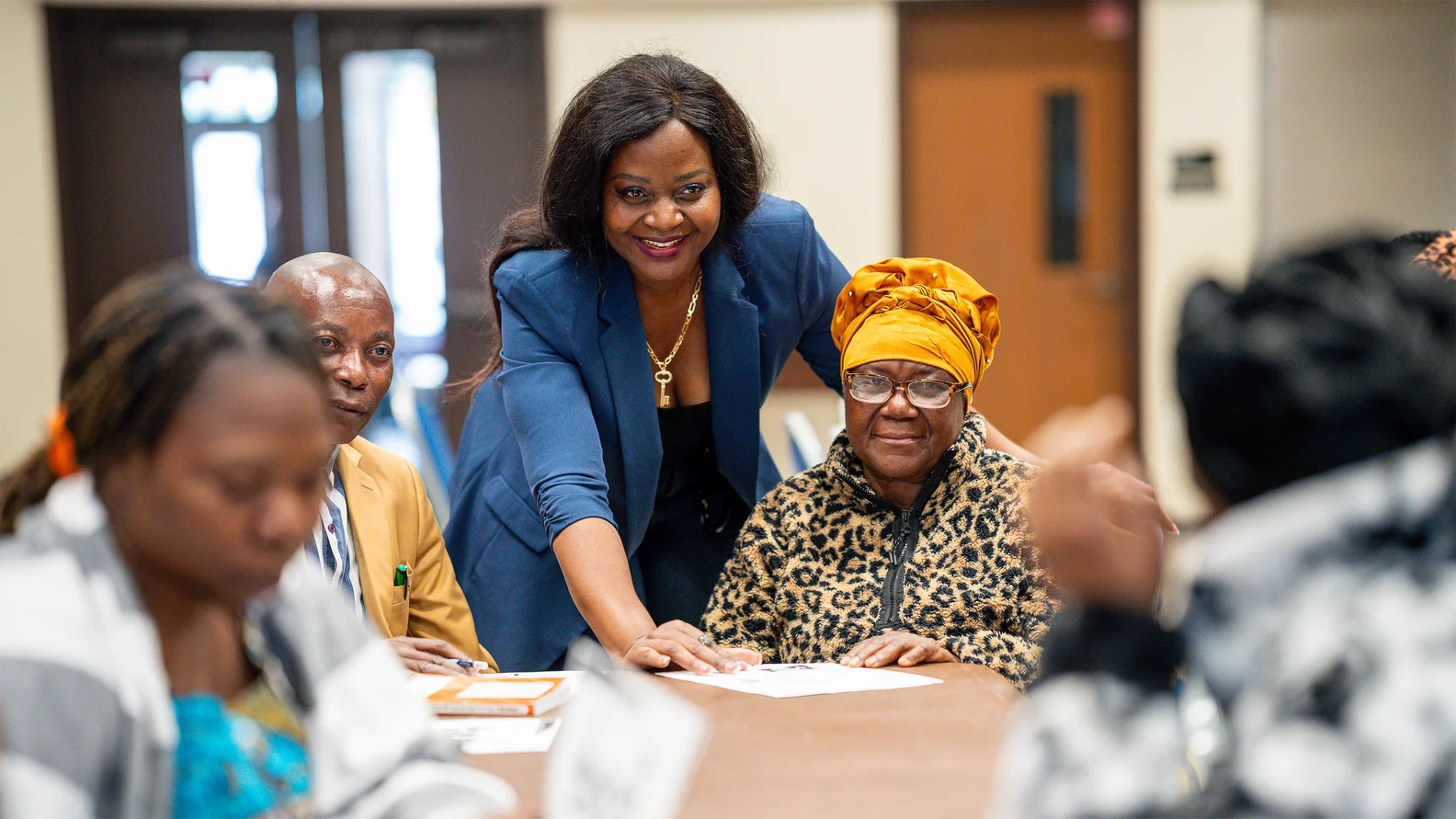
As program director at FAM Houston, Ndjabuka implemented Support Circles while also serving on the Citizenship Advisory Committee.
Working her way through a conference room on Bellaire Boulevard, Congolese American advocate Ndjabuka(opens in new window) is gently sowing trust, one interaction at a time. To an older woman seated in a wheelchair, she bows. To a mother struggling in English, she says in Swahili, “Don’t think about it in your head, just talk.” And when her weekly empowerment group settles in to introduce themselves, she turns to Kakonga—a French-speaking professional tailor, impeccably dressed—and speaks to him in French.
“Give us your full name,” she says, “so we know where to go for clothes.”
Seeking citizenship can be arduous. It requires being quizzed in English, memorizing U.S. history and studying American laws—even when most waking hours already go to simple survival. For Houston’s Congolese immigrants, many of whom have spent years in refugee camps, citizenship can also require an extraordinary leap of trust.
Like other community leaders involved in the Greater Houston Citizenship Project, Ndjabuka earned that trust long ago. “She speaks our language,” says Iziziki, a 47-year-old mother of five who takes the bus to the weekly community group. “She is one of us.”
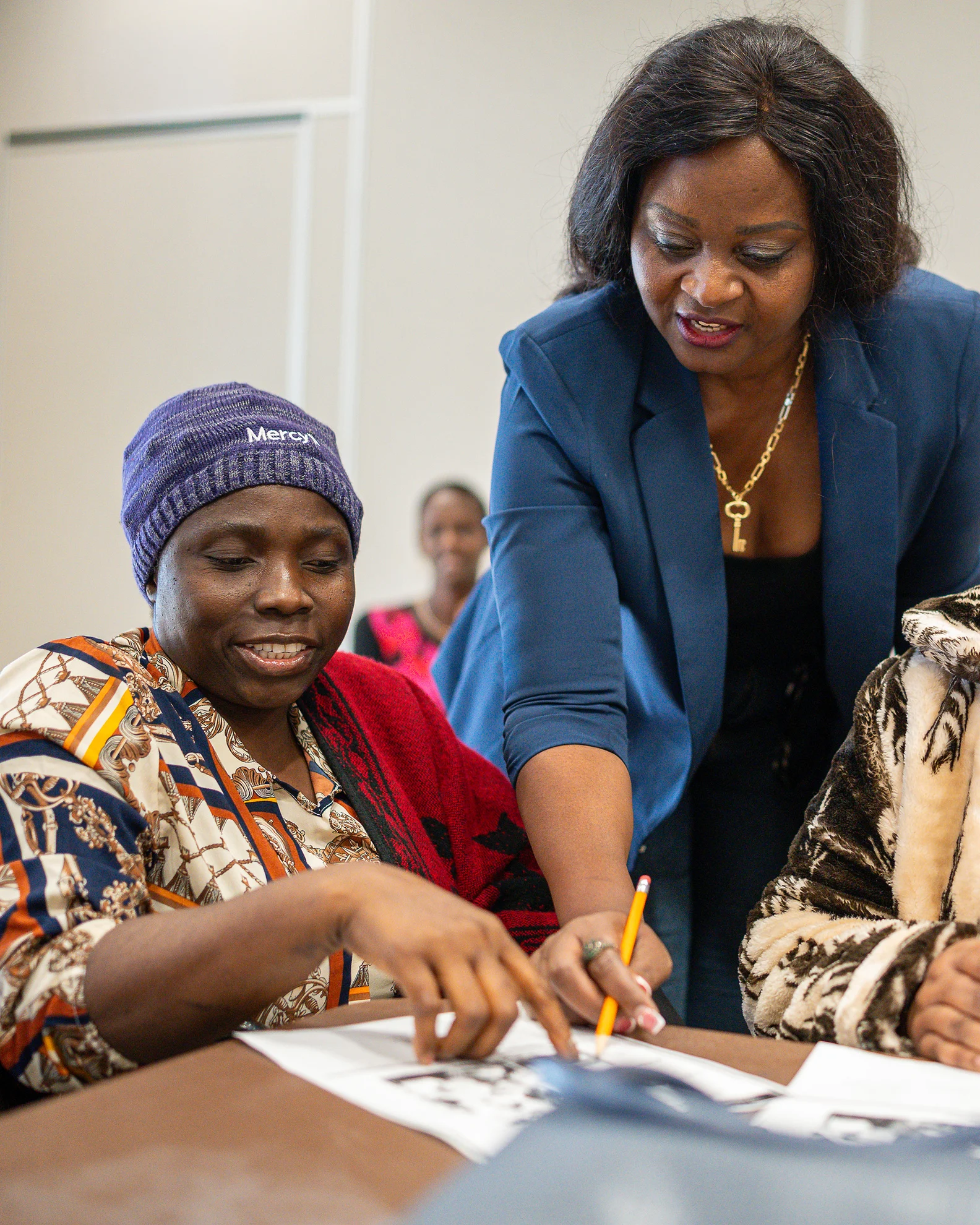
Ndjabuka (right) guides participants through an activity, building trust and connection one conversation at a time.
Previously a system navigator for a Houston hospital, Ndjabuka is now a program director at the nonprofit FAM Houston(opens in new window), which supports refugees, immigrants, and local Houstonians. Her projects include leading the Women’s Empowerment Group(opens in new window), where community members from Congo and other countries meet to learn about resources and hear from guest speakers. Ndjabuka drew on the group’s experiences to advise the Citizenship Advisory Committee and later used the meetings as a foundation for a citizenship Support Circle.
Today, leading conversation in a sleek pantsuit and a hand-tied head wrap, Ndjabuka radiates assurance. A mother of three who has been in the United States for 20 years, she is intent on helping other East and Central African refugees find their footing here.
The emotional nourishment the groups provide is visible, says a volunteer who works with the group. “When the empowerment group started in 2019, I would see Congolese women sitting alone for hours, in darkened rooms with the TV on, in silence.”
Trust in Ndjabuka encouraged Tabu, a recently widowed mother of five, to try for citizenship after struggling to pass the test because of her limited English. “I can’t stay in America without citizenship,” she says. “There were 10 interview questions, I passed three.”
Ndjabuka pressed Tabu to join FAM’s citizenship Support Circle. There, she was encouraged to take an ESL class offered by the Harris County Public Library(opens in new window)—a class that Ndjabuka successfully proposed after building bonds with county library workers through the Greater Houston Citizenship Project.


“I also am going to classes in sewing ... and English and computers,” Tabu says. She took Ndjabuka’s advice in all these endeavors, she says, because of trust. “She calls, texts, emails, and visits consistently.”
Ndjabuka also reminds the group to sing at meetings. And sometimes, she says nothing.
“Back home, where we come from, you don’t look at elder people, for example,” she explains. “You give respect by looking down and bending your knee. They might shake hands or touch your head, like giving a blessing. You don’t speak back if your elder is saying something. We say, ‘Listen more. You will get more.’”