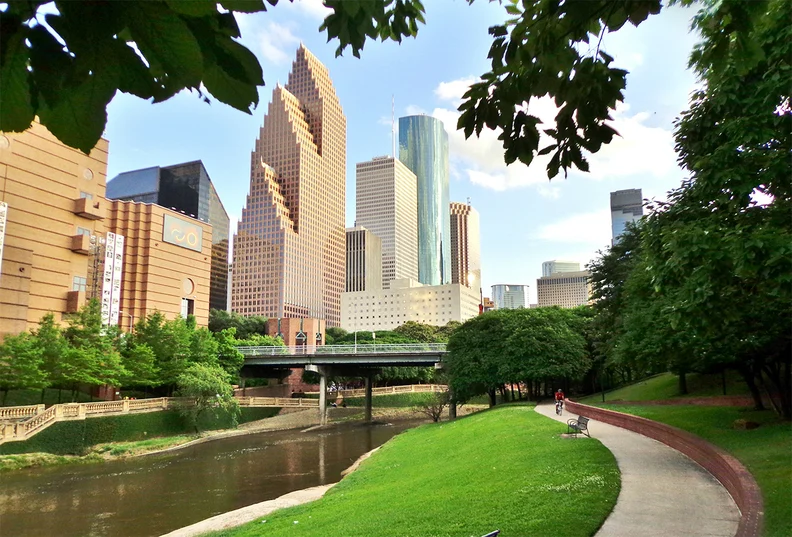
Beyond the bricks: Building community in Houston Freedmen’s Town
Listen to the audio transcription for this article:
In the 1950s, mornings in Fourth Ward began with a rhythm all their own. Children hurried toward school, neighbors waved from porches, and families exchanged news over fences and church steps. Fourth-generation Houstonian and 87-year-old resident Jacqueline Whiting Bostic remembers it clearly. Her childhood took place in the heart of Fourth Ward—Freedmen’s Town—Houston’s first freedom colony.
“Everybody pretty much knew each other,” Bostic said. “Families lived together, they worked together, and it was an excellent time for growing up in Freedman's Town.”
Bostic is the great-granddaughter of legendary civic leader Jack Yates(opens in new window), one of the founders of the community that was formed by newly emancipated families after Juneteenth. But as the city grew, highways and developments altered the neighborhood’s footprint, and the area’s cultural heartbeat began to fade.
“[Fourth Ward] is quite a bit smaller than it was when I grew up,” said Bostic. “And that started happening when the city decided to bring a freeway through the middle of Freedmen's Town…When that happened the area that was a part of Freedmen's Town started being a part of downtown.”
Today, Bostic and others are committed to preserving what remains—and regenerating what was lost. At the center of that work is Houston Freedmen’s Town Conservancy(opens in new window) (HFTC), a nonprofit founded in 2018 to maintain the neighborhood’s heritage and educate the community about its unique story.
Their effort is not only about safeguarding history—it’s about sparking rebirth. And that resurgence is made possible, in part, through Houston Endowment’s strategic giving and trust-based partnership.
The origins of Freedmen’s Town trace back to 1866, when formerly enslaved men and women—newly freed after Juneteenth—began traveling down Old San Felipe Road, now West Dallas Street. More than 1,000 people sought a new future and the opportunity to build schools, churches, businesses, and homes.
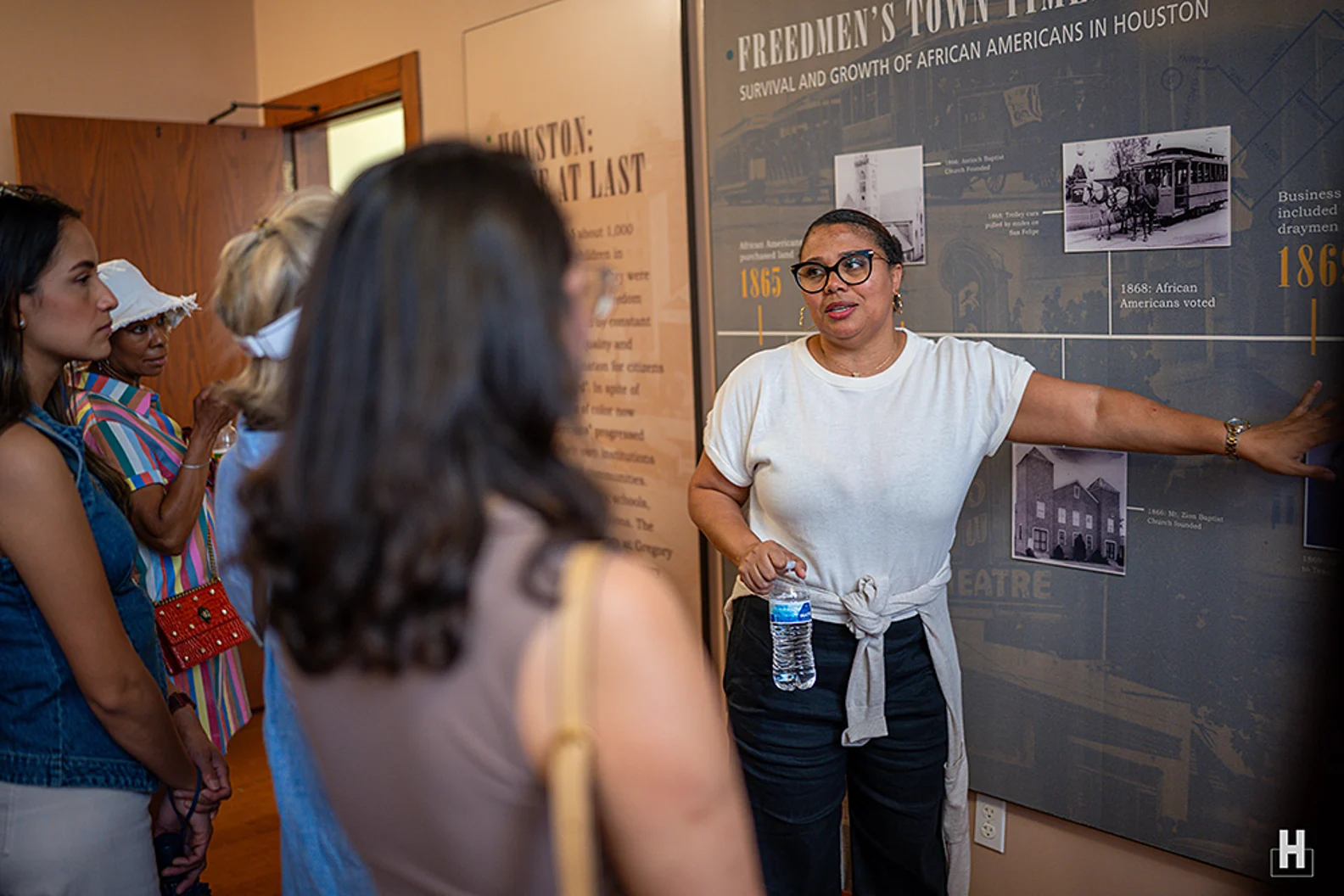
“Freedmen’s Town isn't a slave narrative, it’s a freedmen narrative,” said Sharon Fletcher, Executive Director of HFTC. “[Freedmen had] a commitment and dedication to building a place for free men and women so that their children could live and thrive and become something great.”
The Freedom Colony was the epicenter for Black life until the 1940s. “Freedmen’s Town is the mother ward of Black Houston, and it gave birth to places like Fifth Ward, Third Ward, Independence Heights, and other Black communities here in Houston,” said Fletcher.
But around mid-century that changed. Urban renewal, redlining, and transportation projects carved away at its borders and displaced its residents. Preserving this cultural landscape became an uphill battle—one made more urgent by diminishing federal and local arts funding.
Philanthropy as a Catalyst for Rebirth
In recognition of the significance of this history, Houston Endowment has committed $2.675 million to HFTC since 2020 to help build organizational resiliency and fuel long-term preservation.
“Our approach is to support essential and effective nonprofits that are rooted in the community,” said Bao-Long Chu, Program Director of Arts & Culture at Houston Endowment.
That approach includes unrestricted operating support, capacity-building resources, and strategic capital—tools that allow mid-sized nonprofits like HFTC to stabilize operations, attract partners, and plan for long-term impact.
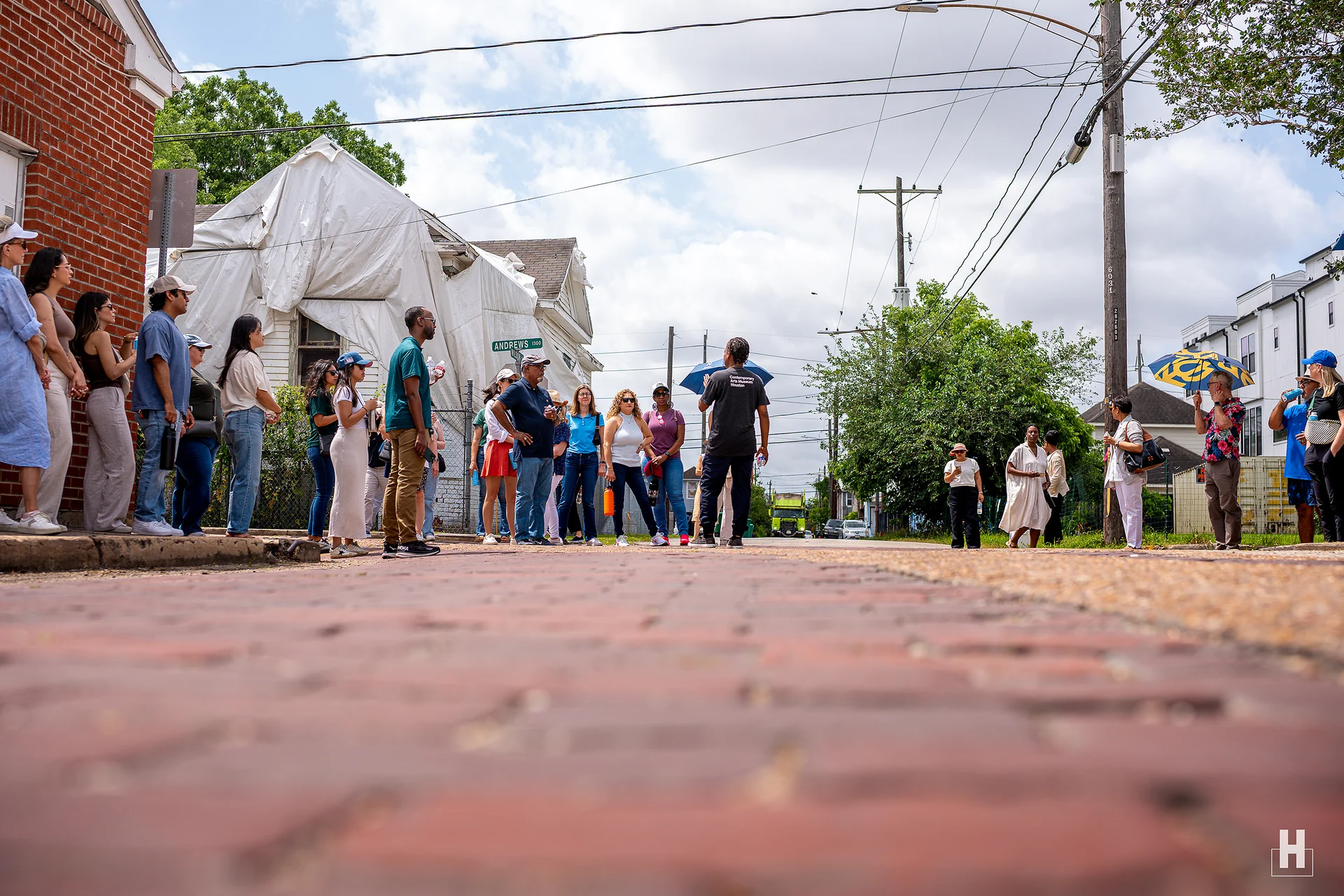
In 2022, the Foundation’s funding expanded to support Rebirth in Action, a multi-year initiative to preserve a mile of Freedmen’s Town’s original brick streets—laid by Black residents in the early 20th century—as well as 35 historic structures throughout the Fourth Ward. In 2024, Houston Endowment allocated $2 million specifically toward the brick-street restoration.

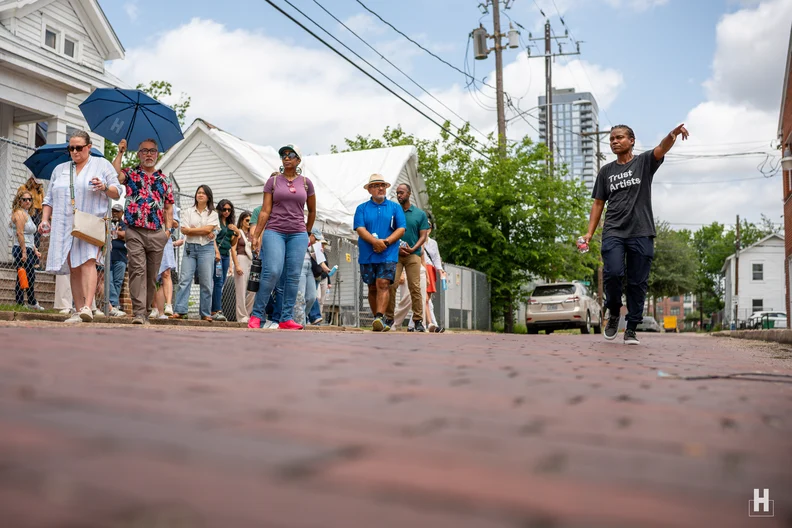

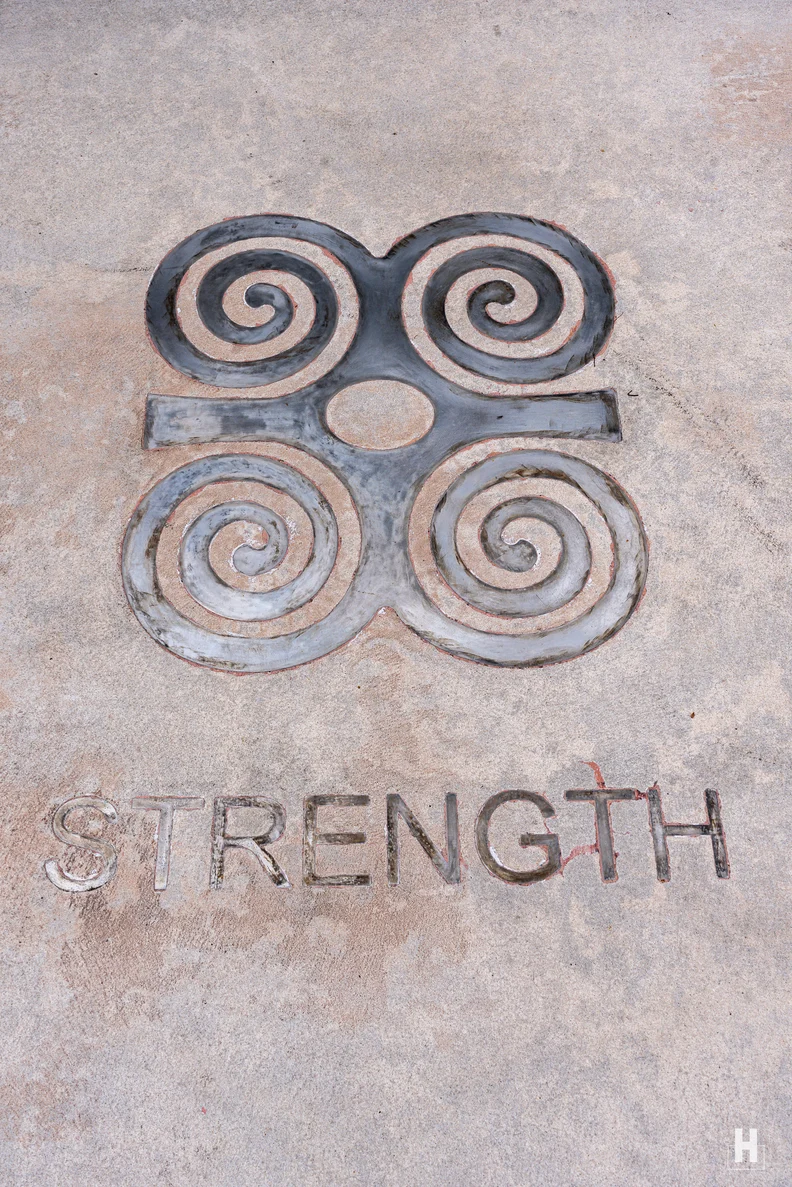


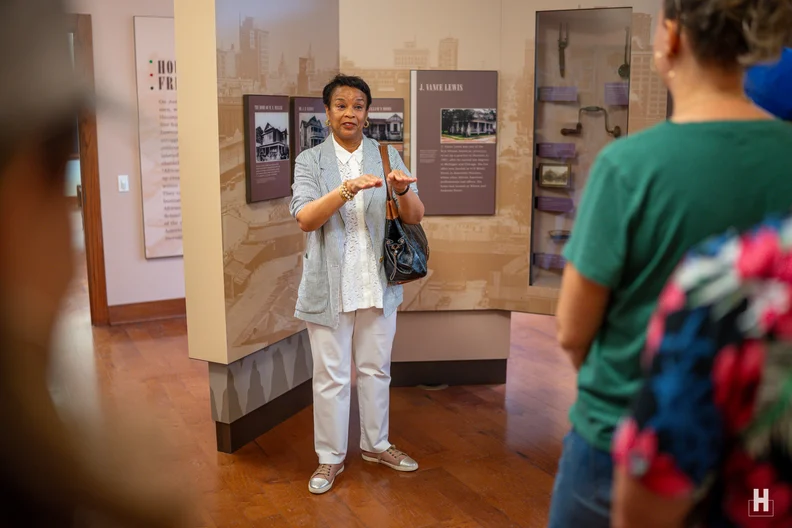

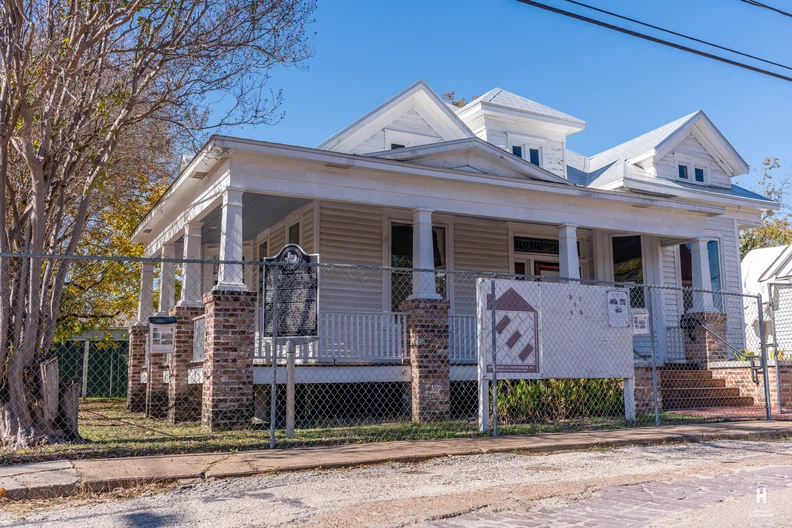

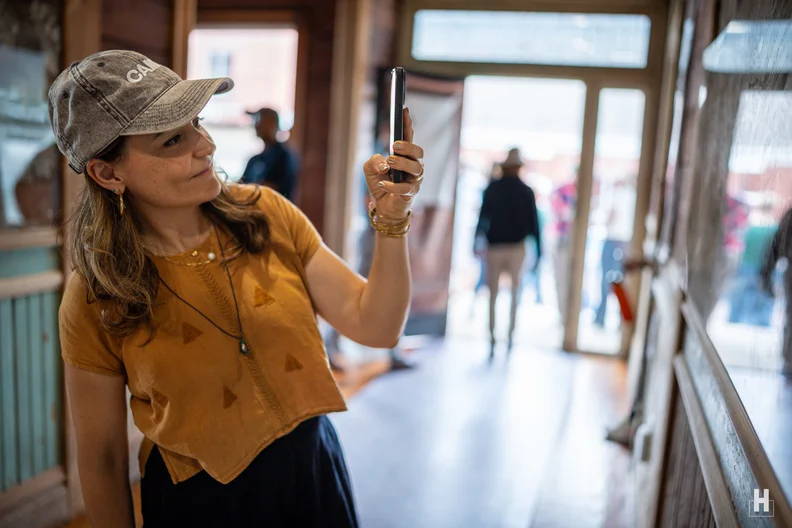

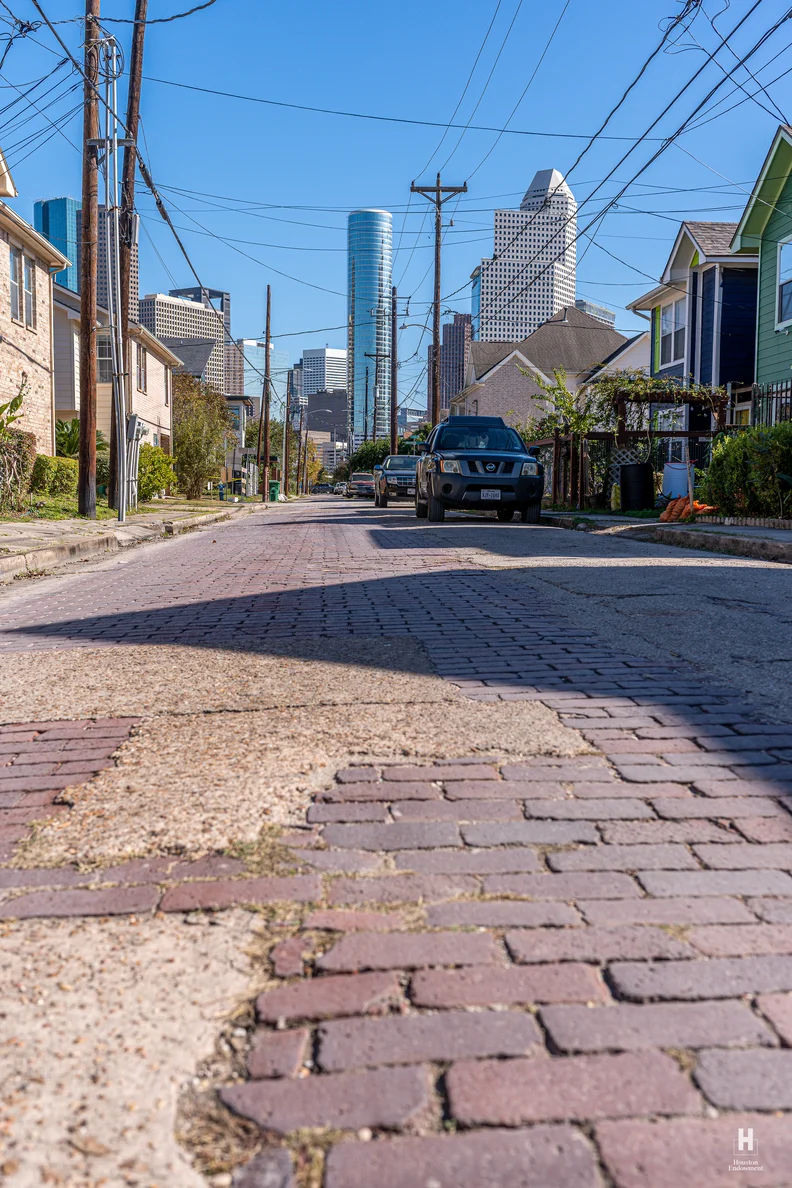
Rebirth In Action will take a phased approach, beginning with an initial phase to honor the neighborhood's narrative through cultural programming, artist activations, and artist residencies in partnership with Contemporary Arts Museum-Houston.
A second phase, bolstered by other funding partners including the Kinder Foundation(opens in new window) and the Wagner Foundation(opens in new window), centers on preserving 30,000 historic bricks and rehabilitating three historic homes. It involves building a pavilion to house the bricks, as well as a partnership with renowned artist Theaster Gates. The final phase will finally return restored bricks to the streets.
“Now people can physically see what equitable revitalization means,” Fletcher explained as she envisioned the completion of the project.
Preservation Rooted in Community Power
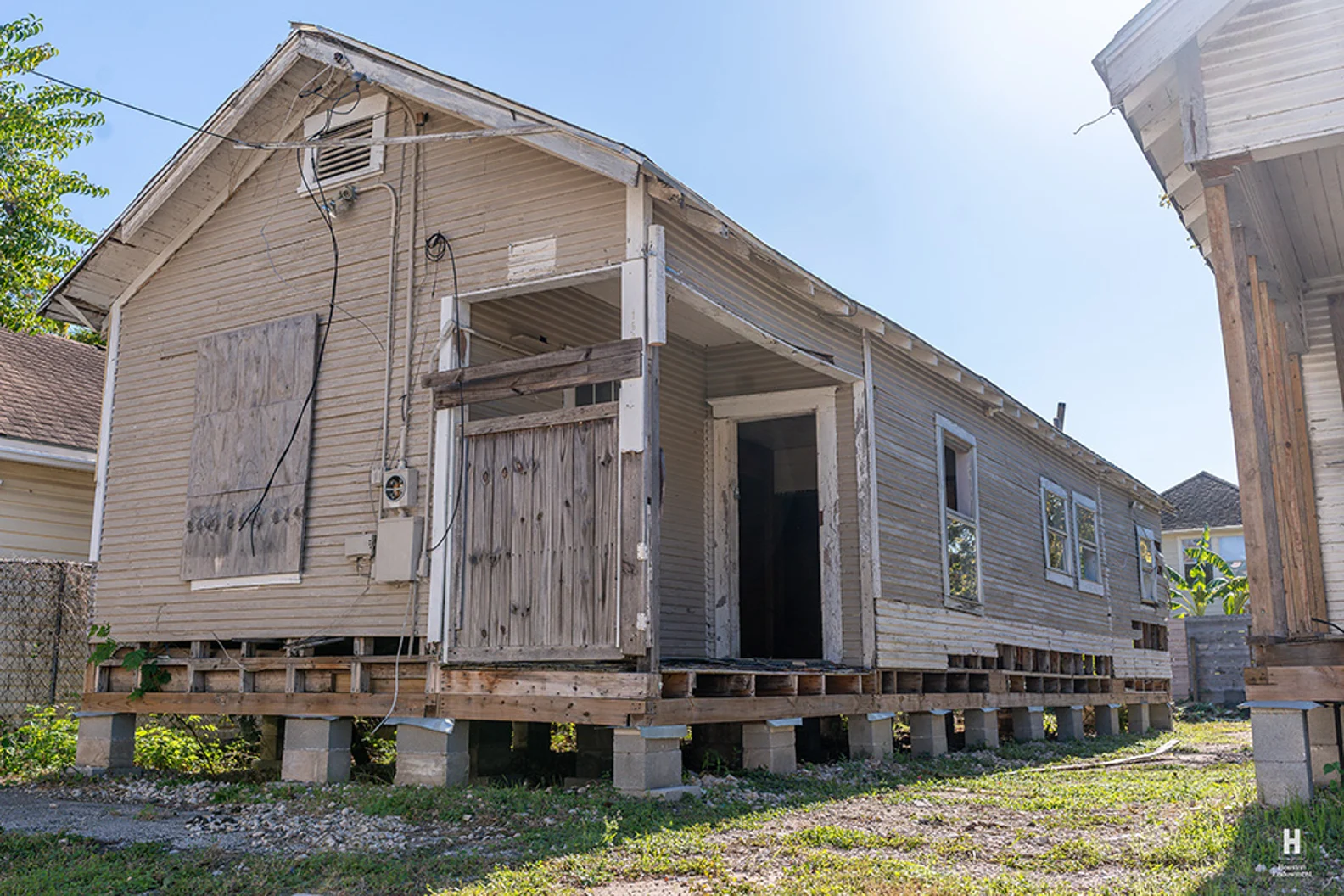
Houston Freedmen’s Town Conservancy is a model of culture stewardship. It demonstrates how preservation, economic development, and community empowerment can move together.
“While we're doing this work of preservation, we're also looking at how people can live here and play here,” said Fletcher.
It was that balance between culture, infrastructure, and community voice that ignited Houston Endowment’s interest to support the organization. The Foundation also recognized the important opportunity to learn how a well-timed investment to a mid-sized organization could yield sustained results for the community.
“The challenge with a project this scale is aligning priorities—historic preservation, infrastructure, cultural programming,” said Chu. “They all move at their own pace.”
The solution, he notes, is partnership: Houston Public Library, Project Row Houses, the City of Houston, Public Works, and many others contribute to the collective movement.
“Preservation and infrastructure can work hand in hand when the community is in the lead,” he said.
Despite decades of discrimination, displacement, and redevelopment, Freedmen’s Town remains a place of identity, pride, and culture. The work of HFTC—and the support of partners like Houston Endowment—aims to ensure that the neighborhood’s legacy not only survives, but also flourishes for future generations.
“HFTC is making sure that this place can exist another 160 years and will continue to be a testament in this kind of litmus test to what we can achieve in the future,” Fletcher said.

The Channel Newsletter
A monthly newsletter full of the work that moves us, the stories that inspire us, and the community that drives us.