Building the next generation of teachers from within
Listen to the audio transcription for this article:
How Houston-area districts are responding to a shifting teacher workforce
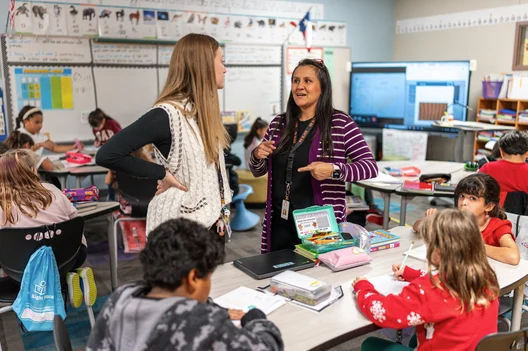
On a recent morning at Anderson Elementary in Houston ISD, first-grade students gathered in groups of four at yellow, blue, green, and red round tables, learning how to decode a passage of text about patriotic icon Betsy Ross. Throughout the classroom, two adults moved in sync — one leading the lesson, the other stepping in to guide, adjust, and support.
One of them, Karla Damian Ibarra, is not yet a full-time teacher.
“I’m a teacher resident with Houston ISD’s Grow Your Own program,” she said, at a recent site visit conducted by Houston Endowment grantee Deans for Impact(opens in new window) (DFI). “And I am a teacher resident here … in a first-grade dual language English language arts classroom with my mentor teacher.”

For Ibarra, the path into teaching didn’t follow the traditional route. As a first-generation college student, cost mattered.
“One of the most important things was the zero to low-cost tuition,” she said. “That was a great help for me.”
Programs like this, often called “grow your own,” are becoming more common across Texas. They allow aspiring teachers to earn a salary while completing their certification, often in the same communities where they grew up.
“I’m a Houston product, from pre-K to 12th grade,” Ibarra said. “So of course I wanted to give back to my community. It fit everything I was looking for.”
The Anderson Elementary visit was part of a broader effort to understand how districts are strengthening the teacher pipeline. DFI, a national nonprofit focused on improving teacher preparation, has been working with Texas partners to design more rigorous grow-your-own teacher apprenticeships that emphasize high-quality, hands-on clinical practice.
In Texas, the organization is supporting districts as they explore Registered Teacher Apprenticeship Programs, including site visits across the state to identify what’s working and how those models can scale.
A system under strain
Ibarra’s experience reflects a broader shift happening across the state.
New data from the Texas Education Agency shows the way teachers enter the classroom has changed significantly in recent years. Across both the Houston region (Region 4) and statewide, districts have relied more heavily on uncertified teachers and alternative pathways to fill vacancies, especially in the years following the pandemic. At the peak of the shortage, more than half of the state’s new teacher hires entered the classroom without full certification.
In response to these trends, Texas lawmakers passed House Bill 2(opens in new window) in 2025, marking one of the most significant shifts in teacher workforce policy in recent years. The legislation phases out the widespread use of uncertified teachers over time, while making new investments in the systems needed to prepare and support certified educators. That includes funding for teacher grow-your-own programs, residencies, mentor supports, and incentives to help people already working in schools earn their certification.

The policy reflects a broader shift in thinking: from treating staffing shortages as a short-term problem to addressing them as a long-term workforce challenge. For years, districts relied on emergency measures to fill classrooms. Now, the focus is on building a more stable pipeline into the profession by creating clearer, more supported pathways.
New TEA data for the 2025–2026 school year suggest early progress in Texas’s teacher pipeline, with fewer uncertified hires, more teachers earning certification, and higher returns of experienced educators.
“What the data shows us is that we can’t rely on a single pipeline anymore. We have to build it intentionally,” said Carlos Villagrana, program officer at Houston Endowment. “That means addressing the teachers who are already in classrooms by helping them earn certification, while also investing in future supply through ‘grow your own’ opportunities that culminate in teacher residencies, and other state-funded preparation pathways. And just as importantly, we have to scale what’s working by bringing districts, partners, and higher ed — including community colleges — together, so these solutions can reach more communities.”

Principal Erica Cantu Tran, right, and Cielo Perez, a first-grade dual language teacher at Anderson, left.
Learning before leading
Principal Erica Cantu Tran sees teacher residents as a sound, long-term investment — not just in staffing, but in quality.
“You want the best teaching, you want the best learning,” she said. “And I think that having … a master teacher, that is my priority.”
Residents are not treated as temporary or secondary staff. From Day One, expectations are high.
“When they come on my campus, they are treated like future teachers,” she said. “The expectations are the same for you as all the other employees on the campus.”
A structured support system helps aspiring teachers meet those expectations. Rather than being “thrown in” as teachers of record, residents spend a full year learning alongside experienced educators: planning lessons, practicing instruction, and receiving feedback before leading a classroom on their own.
Much of the residents’ learning and growth happens through close partnership with a mentor teacher.
“I decided to become a mentor teacher because I enjoy guiding others and helping others to grow,” said Cielo Perez, a first-grade dual language teacher at Anderson.
Perez works with Ibarra daily by co-planning lessons, offering feedback, and helping her navigate the realities of the classroom. The goal is not perfection, but growth.
“I see a lot … I’m happy to see that she’s growing a lot,” Perez said. “She is more confident and more intentional when planning the lessons.”
Mentorship also benefits the mentor.
“When you share your knowledge, you are growing too,” Perez said.
Starting even earlier
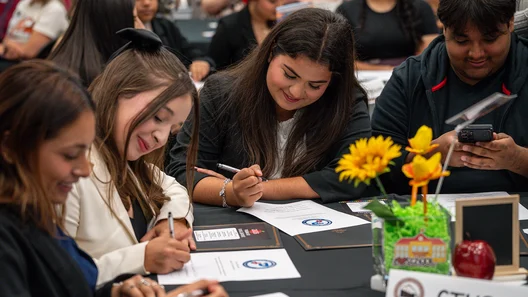
Aldine ISD seniors are taking the first step toward becoming the next generation of educators.
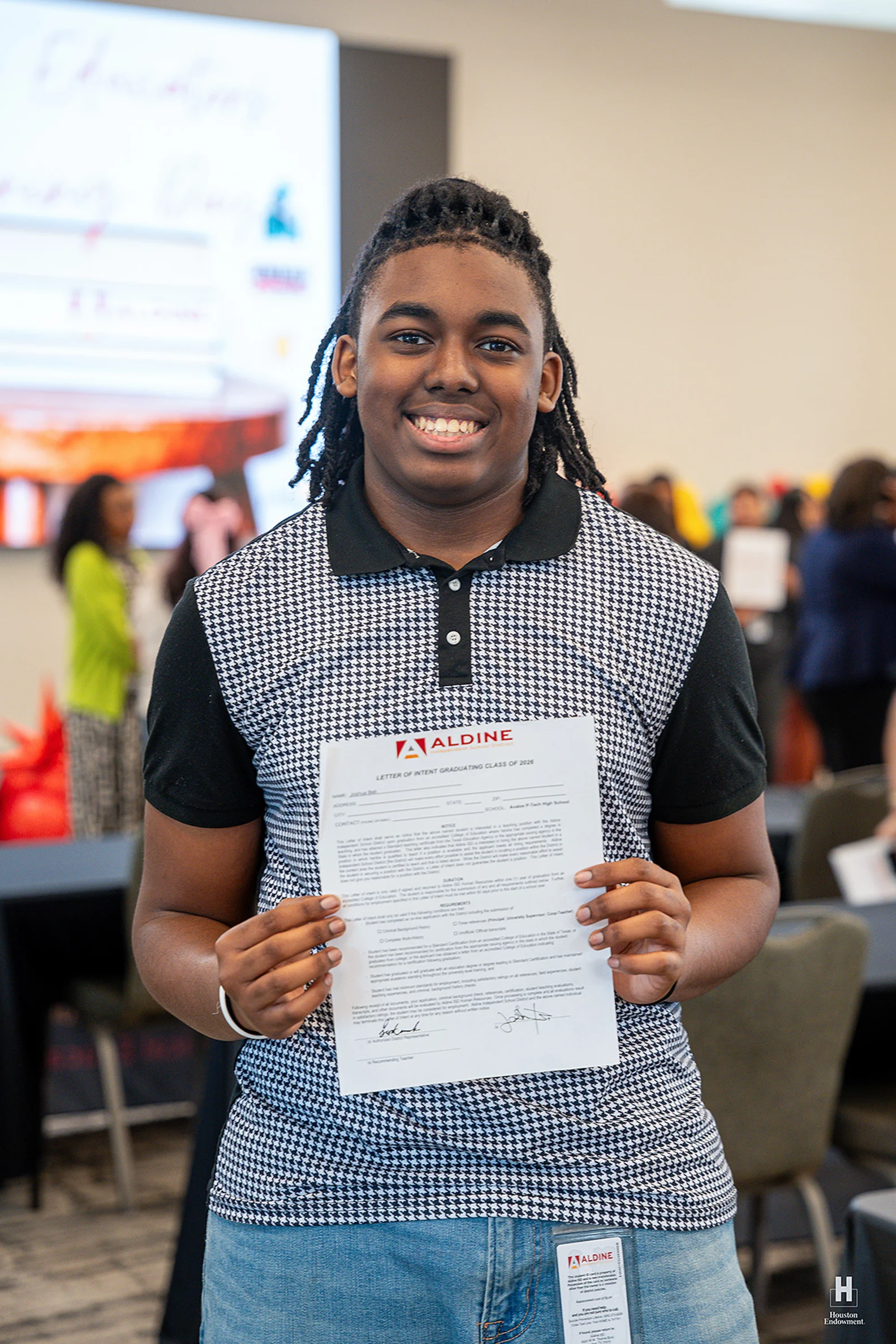
Josh Bell signed a letter of intent to return home and teach in Aldine ISD.
About 20 miles north, in Aldine ISD, the pipeline starts even earlier: before students graduate from high school.
At a recent Future Educator Signing Day, 114 seniors committed to pursuing teaching degrees and returning to the district. That number, district officials said, has doubled from the previous year.
For students like Adriana Brown, the decision is personal.
“Being in the program, it really helped me to know what I want to do in life and to make me realize that I think this is what I want to do, and this is my passion,” she said.
Others see it as a way to give back.
“Coming back here and teaching in my own community, feels more like home and family,” said senior Josh Bell.
Like Anderson Principal Tran, district leaders view these commitments as long-term investments.
“There’s nothing better than someone that grew up in the community,” said Scott Corrick, Aldine ISD’s director of talent acquisition. “If you just have a pattern of hiring year to year … you’re just filling holes.”
Instead, the district is focused on building a sustainable pipeline.
“It helps build our pipeline for many years to come,” Corrick said.
Ramon Minjares, who leads teacher pathways in Aldine, emphasized the importance of removing barriers.
“Our students are able to not have to worry about what classes to take, how to pay for them,” he said. “They graduate debt-free and they’re ready to start as a classroom teacher.”
A portfolio of pathways
Taken together, these stories point to a system in transition.
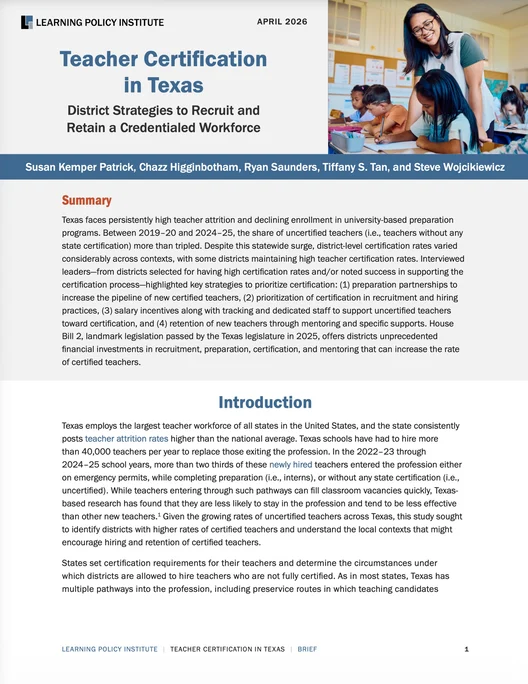
The data shows that Texas, and the Houston region in particular, has moved away from a single, predictable entry point into teaching. In place of a traditional journey is a portfolio of pathways: uncertified hires, grow your own, apprentices, residencies, returning teachers, and alternative certification programs.
But it also shows districts beginning to respond more intentionally.
Programs like Houston ISD’s teacher residency and Aldine’s high school grow your own pipeline are part of a broader effort to rebuild a more stable, locally rooted workforce.
For Ibarra, the impact is already clear.
“At the end of the day … you feel like you’re making a difference,” she said. “Even after a hard day.”
And for the students she teaches, and the ones preparing to follow in her footsteps, that difference may shape classrooms for years to come.

The Channel Newsletter
A monthly newsletter full of the work that moves us, the stories that inspire us, and the community that drives us.
Related Posts
-
What is a Grow Your Own program & why does it matter now in education?
-
Something to celebrate: students sign on to become local teachers
Learn More (Something to celebrate: students sign on to become local teachers) -
Getting an up-close look at teacher apprenticeship programs
Learn More (Getting an up-close look at teacher apprenticeship programs)