Getting Clear About “Community” in Place-Based Learning and Evaluation
Listen to the audio transcription for this article:
Maria H. came to the United States as a teenager in the early 1980s. Decades later, with the support of her church and family, she took citizenship classes, studied English, and sat down for her civics test and naturalization interview. Nerves got the better of her, and she didn’t pass. Still, she didn’t give up. She kept studying the citizenship manual she carried in her purse. Rather than wait a full year until she met the age and residency requirements to be eligible to take the test in her native language, she tried again in English. And this time she passed. “If I could do it, even though I was nervous, you can too,” Maria says. “Everyone should keep trying and give it their best.”
Maria's naturalization story.
Maria’s story illustrates a lesson we learned repeatedly through the Greater Houston Citizenship Project (GHCP): the decision to pursue citizenship is complex and deeply personal. Supporting people on this journey requires both addressing structural barriers to citizenship and building the confidence and motivation individuals need to take that step.
The GHCP is one example of Houston Endowment’s efforts to authentically and intentionally engage communities in developing strategies that support eligible residents throughout their naturalization journey. The GHCP illustrates many of the principles discussed in Getting Clear About 'Community' in Place-Based Learning and Evaluation(opens in new window), a resource developed collaboratively with ELEVATE and other foundations. In particular, the project demonstrates how engaging people closest to an issue can help define challenges and shape potential solutions.
Several key learnings emerged from this work:
Start With a Clear Purpose
Engagement should start with a clear purpose, because that purpose determines who needs to be at the table and how much authority they should hold. The GHCP’s starting point was itself a question: Why had so few of the region’s roughly 360,000 eligible lawful permanent residents pursued naturalization? Houston Endowment didn’t answer that question internally and then ask residents to react to a plan. Instead, we used a human-centered design approach, learning directly from eligible-to-naturalize residents and the organizations serving them to shape what came next.
Recognize That “Community” Is Not a Monolith
One reality that made community engagement for the GHCP particularly complex was that Greater Houston’s eligible-to-naturalize population is not a monolith. Houston is one of the nation’s largest and most diverse metropolitan areas, with 145 languages spoken. We therefore needed to be thoughtful and design a process that reflected the varied experiences of lawful permanent residents across ethnicities, nationalities, languages, and other demographics. This included creating a Citizenship Advisory Committee of local civic and nonprofit leaders with deep ties to immigrant and refugee communities from diverse backgrounds.
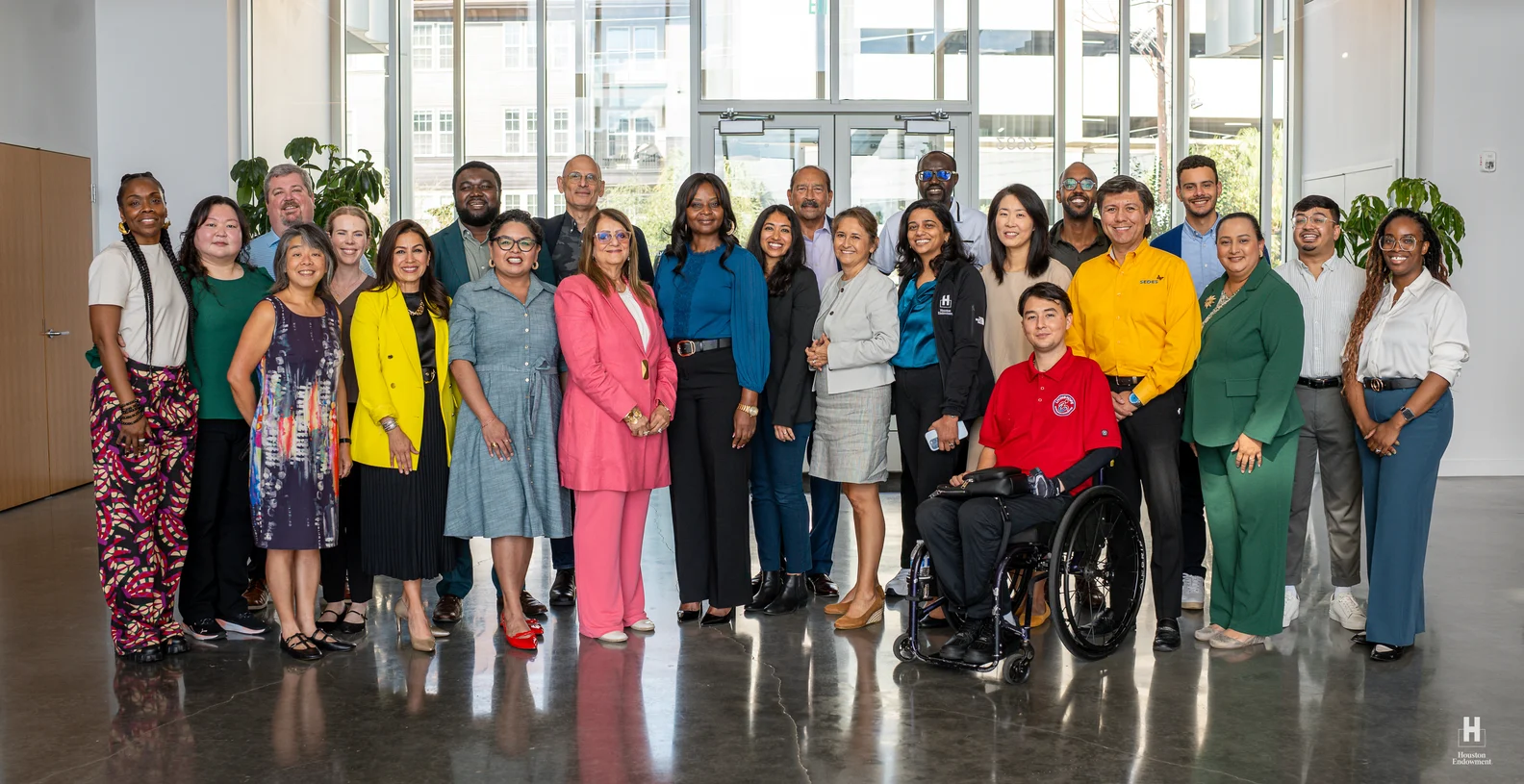
Citizenship Advisory Committee
During the GHCP’s community research sessions, conversations with lawful permanent residents revealed even more complexity within the community we were seeking to engage. Beyond differences in language, ethnicity, and national origin, the citizenship journey also varied by age, gender, employment, and family circumstances. The research revealed several broad archetypes: young adults and older residents, primary caregivers, working-age adults juggling one or two demanding jobs to support their families, and refugees. Each group brought its own beliefs, circumstances, motivations, and barriers. The lesson was clear: designing solutions for one broad “immigrant community” can flatten meaningful differences in people’s experiences. Identifying and understanding specific subgroups makes engagement meaningful rather than symbolic.
Move From Listening to Shared Decision-Making
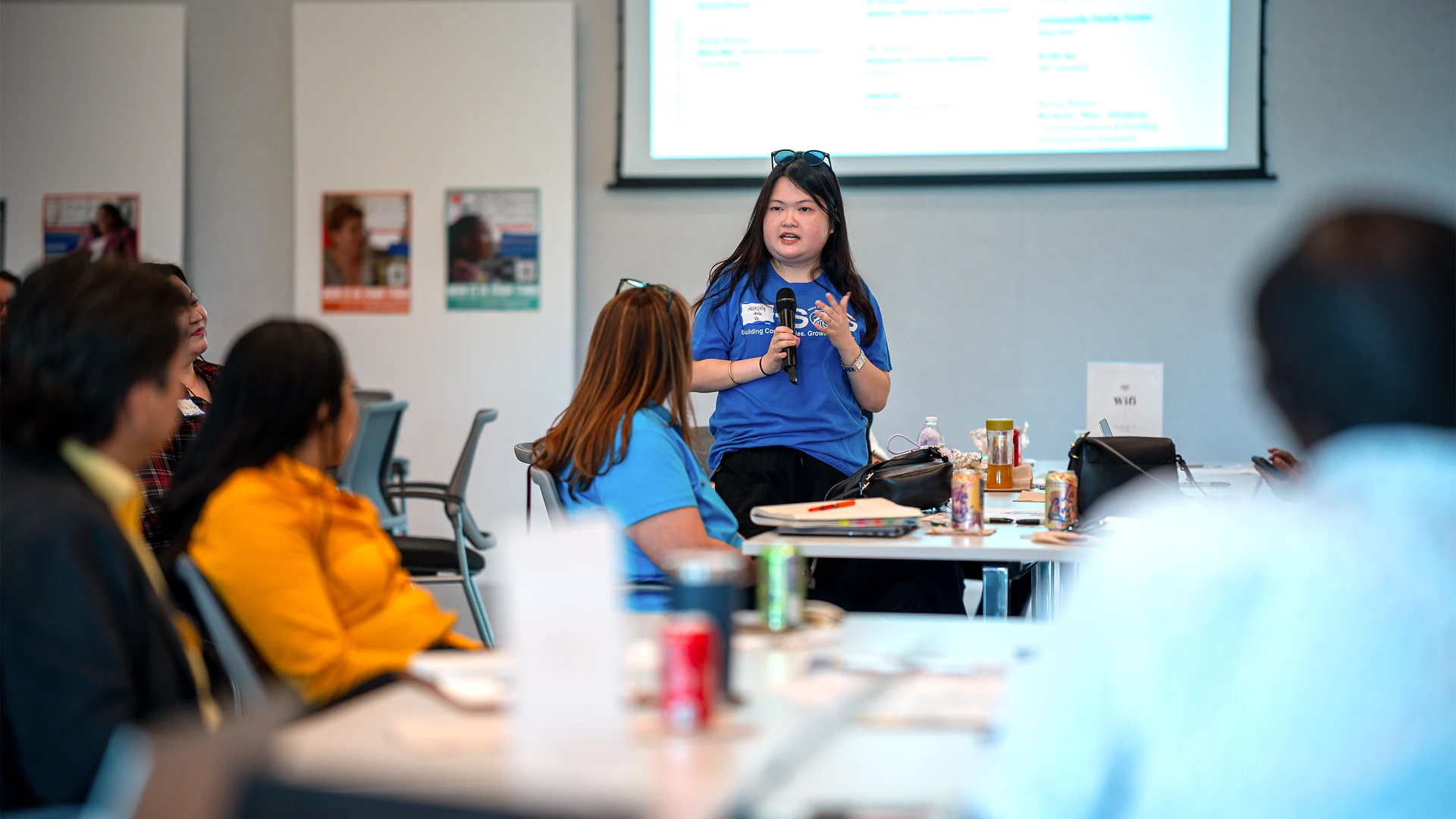
Importantly, community engagement was not simply about extracting data through a research process. Engagement exists on a continuum, from informing people, to consulting and collaborating with them, to ultimately sharing leadership and decision-making. The GHCP deliberately sought to move further along that continuum by inviting community members to co-design potential solutions through 17 workshops. Participants identified barriers, generated ideas, and tested prototypes to determine whether the proposed solutions were both desirable and culturally appropriate.
From that robust community research and co-design process led to the development and implementation of two community-defined programs: Citizenship Support Circles and Citizenship Navigators. Citizenship Support Circles created trusted group settings where residents could learn about citizenship, prepare for the process, practice, encourage one another, and build confidence. Navigators offered more individualized guidance, helping residents connect with legal and other resources when needed.
Together, these programs not only supported more than 351 eligible residents on their journey to U.S. citizenship, but also reflected a commitment to what we heard from residents like Maria: people need both practical, hands-on help to navigate the naturalization process and a supportive community of peers with shared backgrounds or experiences who can encourage them and build their confidence that they can successfully complete the journey.

The Channel Newsletter
A monthly newsletter full of the work that moves us, the stories that inspire us, and the community that drives us.