Why convening matters: A conversation about learning, collaboration, and teacher workforce
Listen to the audio transcription for this article:

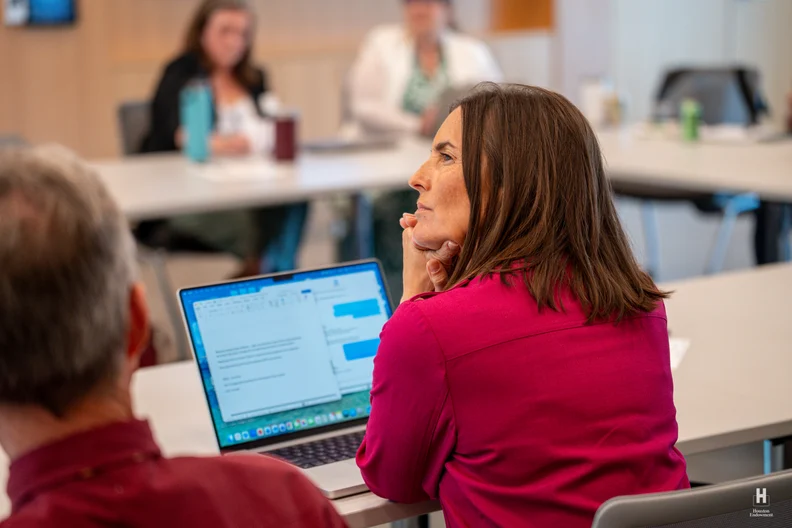


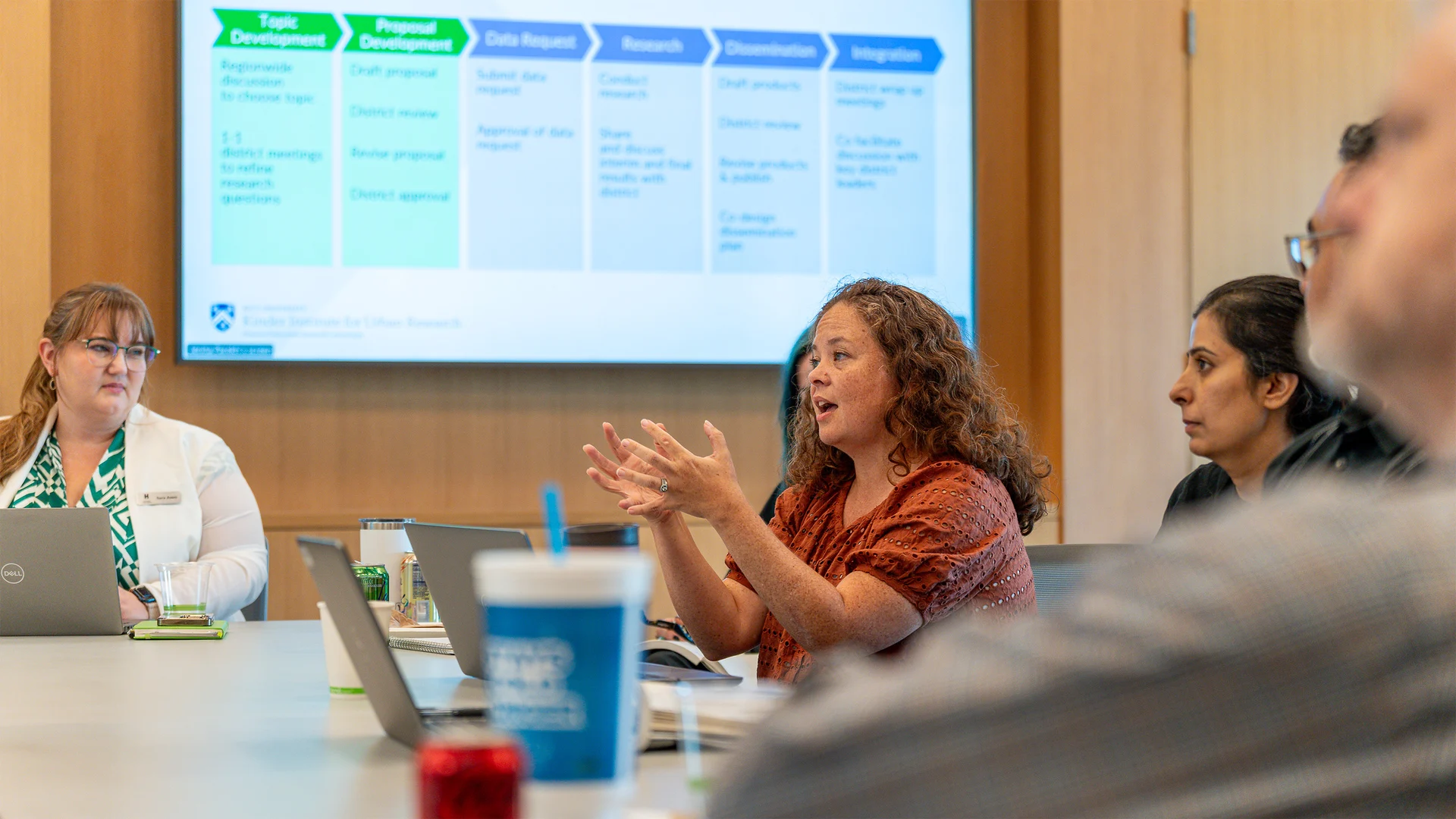
In partnership with the University of Houston’s Center for Research, Evaluation and Advancement of Teacher Education (CREATE(opens in new window)), Houston Endowment recently brought together researchers, practitioners, and partners working across educator preparation pathways in the region.
Senior Researcher Dr. Toni Templeton(opens in new window) worked with Houston Endowment’s Learning & Evaluation and Education teams to create space for organizations to share current research, discuss emerging questions, and explore opportunities for collaboration around Houston’s teacher workforce.
The Greater Houston Teacher Certification Research Roundtable included representatives from TNTP(opens in new window), the Learning Policy Institute(opens in new window), University School Partnerships for the Renewal of Educator Preparation (US PREP(opens in new window)) at Texas Tech University, the Houston Education Resource Consortium(opens in new window) at Rice University, the Research for Educator Equity & Excellence (REDEE(opens in new window)) Center at Texas State University, UH CREATE, Education Policy Initiative at Carolina (EPIC(opens in new window)) at University of North Carolina at Chapel Hill, and Center for Program Evaluation and Research(opens in new window)/Steuck & Associates. The April 28 event reflected Houston Endowment’s commitment to learning alongside partners and using its role as a convener to strengthen connections across the field.
We spoke with one participant, Texas State University professor and REDEE co-founder Dr. Minda Lopez, about why the roundtable stood out and why opportunities like this matter.
Q&A with Dr. Minda Lopez
Dr. Minda Lopez
HEI: What made the roundtable discussion meaningful for you?
ML: I would say this was a very unique opportunity. We do not get these opportunities very often.
A lot of this work can be very siloed. We’re busy doing research, often by ourselves in our offices, and while we may read each other’s work, we don’t always get the opportunity to ask questions in real time or really dig into the nuances together.
What was exciting about this roundtable was that everybody in the room was deeply familiar with the topic already. We didn’t have to spend half the conversation explaining the basics. We could all just jump into the deep end.
That allowed us to talk about the nuances—what people are seeing, what gaps exist, what questions still need to be explored, and where different pieces of research connect with one another.
HEI: How did hearing from different organizations and researchers shape the conversation?
ML: What made the discussion especially valuable was that people were approaching teacher preparation from different angles.
Some people were focused on residency programs. Others were looking at grow-your-own models, alternative certification, policy impacts, district perspectives, or teacher experiences.
It almost felt like assembling a puzzle. The big picture is teacher preparation, but there are all these different pathways and approaches. The roundtable gave us a chance to see how those pieces connect—where there are similarities, where there are differences, and where there may still be gaps in understanding.
It was also helpful because some groups are talking to principals and district leaders, while we’re talking directly to teachers. Bringing those perspectives together helped create a more comprehensive picture of what’s happening across the region.
HEI: How was this experience different from a conference or traditional research setting?
ML: At conferences, you’re often spread thin. You’re moving from session to session, preparing for presentations, and trying to fit everything into a schedule.
This felt very different because it was so targeted. Everyone there was working in this space, and many were focused specifically on the Houston area. That’s rare.
It also created room for more organic conversations—not just during the formal roundtable, but in the informal moments before and after. We could ask each other questions like, “Why did you approach it this way?” or “What are you seeing in your data?” Those conversations are incredibly valuable.
I think it has the potential to really impact what’s happening in the Houston region because of that laser focus.
HEI: What role can convenings like this play in strengthening work across the region?
ML: I think there’s a lot of potential for collaboration.
Something I was talking about afterward was how exciting it would be if Houston Endowment continued to use gatherings like this almost as a think tank—bringing together people who are working on related challenges and asking, “What could we do together around this new question?”
That kind of collaboration can help people build on each other’s work instead of duplicating efforts. It creates opportunities to think collectively about challenges facing the Houston region and how different organizations can contribute solutions.
I think that collaborative nature is what made the roundtable so meaningful.
The Channel Newsletter
A monthly newsletter full of the work that moves us, the stories that inspire us, and the community that drives us.